Why Atlanta Has 50 Peachtree Streets, a Neighborhood Named After a Deer Head, and Other Things Locals Just Accept
Ask anyone who's lived in Atlanta longer than five minutes and they'll tell you: this city makes its own rules. The streets are confusing on purpose. The airport is a small country. The pollen is a public health event. And somewhere along the way, "Atlanta" became "ATL," "Hotlanta" (cringe, never say this out loud), the "City in a Forest," and the "City Too Busy to Hate," all at once.
But peel back the surface and Atlanta has a story that's stranger and richer than most cities its age. Here are the hyper-local facts, quirks, and accidental decisions that made the city what it is — most of which even longtime residents have never heard.
1. Atlanta Was Almost Called Atlantica-Pacifica
Before this city was Atlanta, it was four other things. It started as Terminus in 1837 — literally just the end of the railroad line. A stake was driven into the ground at what's now the Zero Mile Post (you can still visit it, near Underground Atlanta), and that was the founding moment. Romantic, right?
Then a settler named John Thrasher built some houses and a store, and locals started calling the place Thrasherville. In 1843, Governor Wilson Lumpkin had it renamed Marthasville after his daughter Martha. Two years later, the chief engineer of the Georgia Railroad suggested Atlantica-Pacifica, which was thankfully shortened to Atlanta before anyone had to put it on a business card.
The whole naming process took less than ten years. The city has been arguing about itself ever since.
2. Buckhead Is Named After an Actual Deer Head
In the 1830s, a general store owner named Henry Irby shot a large buck and mounted its head on the wall of his shop near what's now the intersection of Peachtree and Roswell roads. The buck head became a landmark — travelers used it as a meeting point — and locals started calling the area, simply and literally, "Buck Head."
Multiple attempts to rename it to something more elegant in the late 1800s all failed. Atlanta voted with its tongue. The city's wealthiest neighborhood is, for all eternity, named after taxidermy.
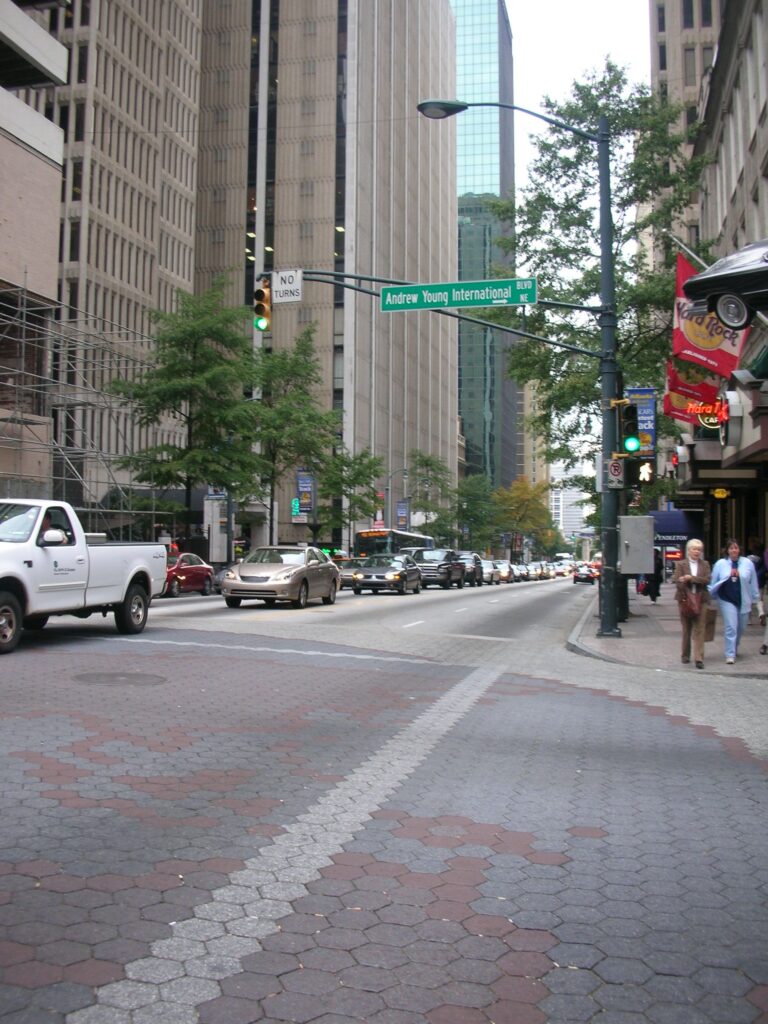
3. There Are More Than 50 Peachtree Streets
Locals know this is true but newcomers refuse to believe it: the greater Atlanta area contains more than 50 streets with the name "Peachtree." There's Peachtree Street, Peachtree Road, Peachtree Way, Peachtree Lane, Peachtree Circle, West Peachtree, East Peachtree, Peachtree Industrial, Peachtree Battle, Peachtree Dunwoody, Peachtree Hills, and so on, and so on, and so on.
The irony? Georgia is famous for peaches, but Atlanta was never really a peach-growing city. Most historians believe "Peachtree" actually came from a Muscogee Creek village called Pakanahuili, which was later transliterated to "Pitch Tree" (referencing pine sap) and eventually corrupted to "Peachtree." So the most quintessentially Atlanta street name might be based on a 200-year-old typo.
4. The Whole City Burned Down, and the Phoenix Became the City Seal
On November 15, 1864, Union General William T. Sherman's troops set fire to Atlanta as part of his March to the Sea. Almost the entire commercial district was destroyed. Only churches, hospitals, and a handful of homes survived.
What Atlanta did next is the most Atlanta thing imaginable: rebuilt itself almost immediately and then put a phoenix rising from the ashes on the official city seal. The Latin motto underneath, Resurgens, means "rising again." Look at any city of Atlanta sign and there it is. The city's whole identity is built on the bit.
5. The 1996 Olympics Almost Didn't Happen Here
Atlanta beat out Athens, Toronto, Melbourne, Manchester, and Belgrade for the 1996 Summer Olympics — the Centennial Games, marking 100 years of the modern Olympics. Athens was the heavy favorite (it was, you know, the actual birthplace of the Olympics). Atlanta won anyway, in part because of the persistence of attorney Billy Payne, who basically willed the bid into existence.
The Games left a permanent mark: Centennial Olympic Park, much of the modern infrastructure of downtown, and a tragic shadow — the Centennial Olympic Park bombing on July 27, 1996. But the long-term impact was Atlanta's coming-of-age as a major international city.
6. The Varsity Has Its Own Secret Language
The Varsity, on the corner of North Avenue and Spring Street, is the world's largest drive-in restaurant. Every day it serves the equivalent of two miles of hot dogs, 2,500 pounds of potatoes, and 300 gallons of chili. On Georgia Tech game days, it can feed 30,000 people.
But the truly Atlanta thing about The Varsity is the order code:
- "Naked dog walking" = plain hot dog, to go
- "Heavy weight" = extra chili
- "Mary Brown" = burger with no bun
- "N.I." = an orange drink with no ice
- "Bag of rags" = potato chips
- "Strings" = french fries
The legendary "What'll ya have?" greeting is so iconic it's been screamed at customers since 1928.
7. Margaret Mitchell Wrote Gone With the Wind Because She Was Bored
In 1926, Atlanta journalist Margaret Mitchell injured her ankle and was stuck at home recovering. Her husband, tired of bringing her library books, told her she should just write her own. She did. Ten years later, Gone With the Wind won the Pulitzer Prize, became one of the bestselling novels of all time, and was adapted into the highest-grossing film of its era (adjusted for inflation, it still is).
You can visit her tiny apartment — she called it "The Dump" — at the Margaret Mitchell House in Midtown.
8. Hartsfield-Jackson Is the Busiest Airport in the World
It has been since 1998. Most years it sees over 100 million passengers — roughly the population of Egypt — passing through its terminals. The combined terminal footprint is roughly the size of 45 football fields. There's a joke among Southerners that when you die, you don't go straight to heaven; you connect through ATL.
9. Georgia Tech's Steam Whistle Blows Every Hour
Walk anywhere near the Georgia Tech campus in Midtown and you'll hear it: at five minutes before every hour, from 7:55 a.m. to 5:55 p.m., a steam whistle blows. It's been a campus tradition for over a century, signaling class changes. Locals who live in nearby Home Park and Atlantic Station just stop noticing it. New residents take about a week to ask, "what was that?"
10. It's (Technically) Illegal to Tie a Giraffe to a Streetlamp
Atlanta has its share of weird old laws still technically on the books. The most famous: it is illegal to tie a giraffe to a street lamp or telephone pole within city limits. We assume someone, at some point, had to be told.
11. The Atlanta Falcons Were Named by a Schoolteacher
When the NFL came to Atlanta in 1965, ownership ran a public contest to name the team. Over 500 names were submitted. The winning entry came from a schoolteacher named Julia Elliott, who suggested "Falcons" because, in her words, the falcon is "proud and dignified, with great courage and fight." She was honored at the team's first game in 1966.
12. The BeltLine Is Slowly Eating the City (in a Good Way)
The Atlanta BeltLine is a 22-mile loop of converted railroad corridor that wraps around the urban core, currently being transformed into walking trails, bike paths, parks, transit, and adjacent development. When fully complete, it will connect 45 neighborhoods and is already one of the largest urban redevelopment projects in U.S. history.
If you've walked the Eastside Trail through Old Fourth Ward, past Ponce City Market, you've been on the BeltLine. The whole project started as a Georgia Tech master's thesis in 1999.
13. Atlanta Is Officially the "City in a Forest"
Despite being the ninth-largest metro area in the country, Atlanta has one of the highest tree canopies of any major American city — roughly 47% by some measures. From the air, the city center looks like a forest with buildings poking out of it. That's why pollen season is the way it is, and that's why Atlantans put up with it: the same trees that ruin our cars in April give us the shade and the green that make summer survivable.
The Atlanta That Locals Know
Atlanta is a city that contradicts itself constantly. It's Southern but cosmopolitan, ancient but new, sleepy in one ZIP code and sprinting in the next. It's a place where you can eat soul food at Paschal's, see contemporary art at the High, walk the BeltLine past murals taller than your apartment, and end the night at a vinyl bar in Cabbagetown — all in the same evening.
If you've lived here for more than a year, congratulations: you've learned to love a city named after a railroad terminal that almost got called Atlantica-Pacifica. Welcome to ATL.
This article is brought to you by eMaids of Atlanta, a locally owned cleaning service Atlanta residents have trusted since 2015. Serving Buckhead, Midtown, Sandy Springs, Roswell, Alpharetta, Johns Creek, and the surrounding metro — eMaids provides professional maid service Atlanta families rely on and Atlanta home cleaning that comes with a 100% Happiness Guarantee.